
When it comes to cooking, the most important thing you need is the right knife. But if the knife is not sharp enough to use properly, your cooking safety could be compromised. This is especially true for high-quality Japanese knives, which are renowned for their exceptional sharpness, precision, and craftsmanship. However, even the finest Japanese knife needs proper care and the right sharpening technique for a longer life.
Many people assume they need a professional to sharpen their knife. This is a common misconception because you can do this activity at home using a sharpening rod. It is a good way to preserve the sharpness of your knives without damaging them. In this blog, you will learn the different types of sharpening rods, the proper steps of sharpening a knife with their help, and more.
Types of Knife Sharpening Rods
Japanese knives are known for efficient work and need proper care. So, it is essential to choose the right tool to sharpen it. A sharpening rod is a perfect tool for this task. Let's discuss their various types.
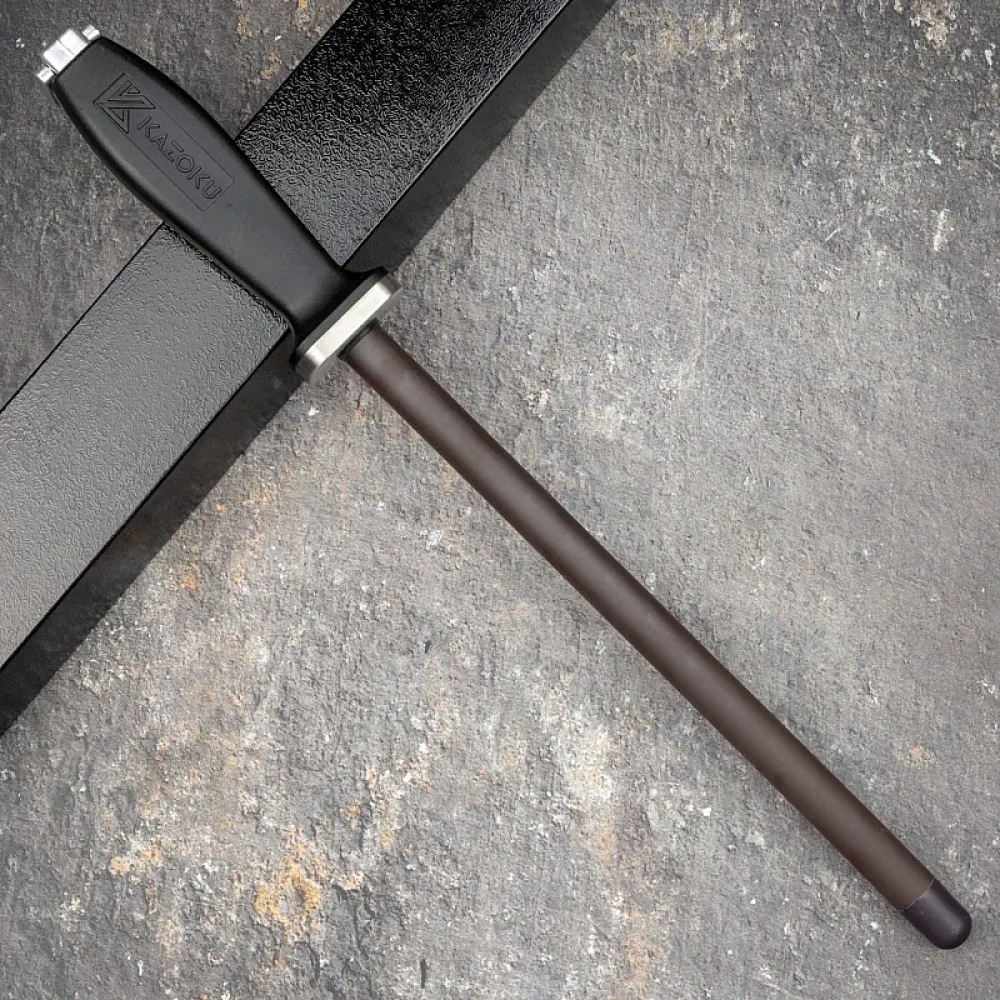
- Diamond sharpening rod: This type of sharpening rod is great if you want quick results. The Kazoku diamond sharpening rod can even bring a completely dead and dull blade back to life in just a few strokes.
- Steel sharpening rod: A steel honing rod realigns the edge of the knife to maintain its cutting performance. This makes it suitable for most Western-style knives made from softer steel.
- Ceramic sharpening rod: These sharpening rods, specifically Kazoku ceramic sharpening rods, are best for expensive Japanese knives. This rod gives a razor-sharp edge to your knife.
5 Easy Steps to Sharpen a Knife Using a Sharpening Rod
Now you know the types of sharpening rods, here are 5 easy-to-follow steps to sharpen your knife like a pro:
Position the Rod
The initial step in the Japanese knife-sharpening process is the correct placement of the sharpening rod. The key to this is finding a stable spot, e.g., a towel on top of your kitchen shelf or a cutting board. Now, for you to be safe, grab the handle as firmly as you can. At this step, ensure the rod is vertical.
Put the Knife at the Correct Angle
One of the more crucial steps is the angle. Use a 15-20 degree angle for sharpening your knife. A 15-degree angle is used in the case of Japanese knives because it provides a razor-sharp edge. You are now required to hold the knife to the rod at the same angle.
Stroking the Knife
Once you have selected the angle, position the heel of the knife in a manner that it comes in contact with the bottom section of the sharpening rod. Now maintain the selected angle. Sweep the blade down and towards the tip in a fluid motion. Repeat the same on the other side and do this in total about 4-6 times on each side.
Checking the Sharpness
The next step in the knife-sharpening process is to test the blade for its sharpness. When you finish stroking the knife a number of times, check to see if it is sharp enough for your liking. Take a tomato and try to slice it, or another test is using an A4 printing paper and try to cut it. The cut must feel smooth without much hindrance.
Cleaning the Blade
The last step is to clean the blade of the knife. This is done to get rid of any debris. You must use a clean cloth for this purpose. Not performing this step could result in metal tracking on your food the next time you use the sharpened knife for slicing. After the knife is totally clean, put it safely inside a high-quality knife storage bag.
What are Some Common Mistakes to Avoid When Using a Sharpening Rod?
It may seem that using a sharpening rod is a simple task. However, it is easy to make mistakes even when a single step is done in an improper manner. Let's discuss these mistakes.
- Incorrect angle: Always sharpen your knives at the correct angle, or you risk a too-thick or fragile edge.
- Changing the angle mid-stroke: Changing the angle during stroking can affect the burr formation and create edges that fail to perform well.
- Not doing grit progression: Skipping grit progression is one of the biggest mistakes in knife sharpening. It results in the creation of an edge that has no bite.
- Not using appropriate pressure: You must always use a moderate amount of pressure during the sharpening of a knife. Putting an excessive amount of pressure can damage softer steels and affect bevels.
- Oversharpening: Oversharpening a dull knife can shorten its life rather than improve it. It can also change the blade profile of your knife.
Conclusion
A sharpening rod is an essential piece of equipment, and mastering how to use it means your time spent cooking will be fun & effortless. If you sharpen your knives whenever needed, then you can ensure that they are slicing through tough food items with ease. Make sure to follow the entire sharpening process from start to finish. Avoid mistakes such as applying excessive pressure when sharpening to ensure your knife lasts as long as possible. If done correctly, your blade will be at optimal sharpness, helping you win all cooking challenges. If you are looking for a reliable seller for knives and sharpening rods, then you can check our vast collection at Kazoku Knives.
FAQs
Can any knife be sharpened with a rod?
Yes, you can sharpen any kind of knife with a sharpening rod, even if the knife is extremely dull because of regular use.
What dulls a knife the fastest?
The fastest way to dull a knife is by using the wrong surface for cutting. Knife edges can get damaged if used on a surface like ceramic, glass, marble, etc.
Why is my knife not sharp after sharpening?
One of the most common reasons why your knife is not sharp even after sharpening is if you are sharpening it at an angle that is too high for it.
How often should I use a sharpening rod?
A sharpening rod's use depends on whether you cook at home or if you are a chef. In case you are a home cook, then use a sharpening rod every week. Chefs should sharpen their knives once or twice a day.
Leave your comment