
Japanese blades are known for their exceptional sharpness, craftsmanship, and beautiful finishes. Caring for your favorite traditional blade is like a quiet ritual, linking you directly to the storied heritage behind years of craftsmanship. Whether you are preparing a speedy weeknight meal with a Japanese kitchen knife or admiring a cherished katana gifted by your grandfather, that edge must be kept razor-sharp. Japanese sword polishing is a precision process and demands deep focus, a steady hand, and precise technique to avoid any accidental slips.
All over Japan, veteran sword and knife blade sharpeners devote whole lifetimes to learning this art, making sure every single stroke is perfect. In this blog, you are going to learn the proper and safe way to polish Japanese blades for that mirror finish in easy steps.
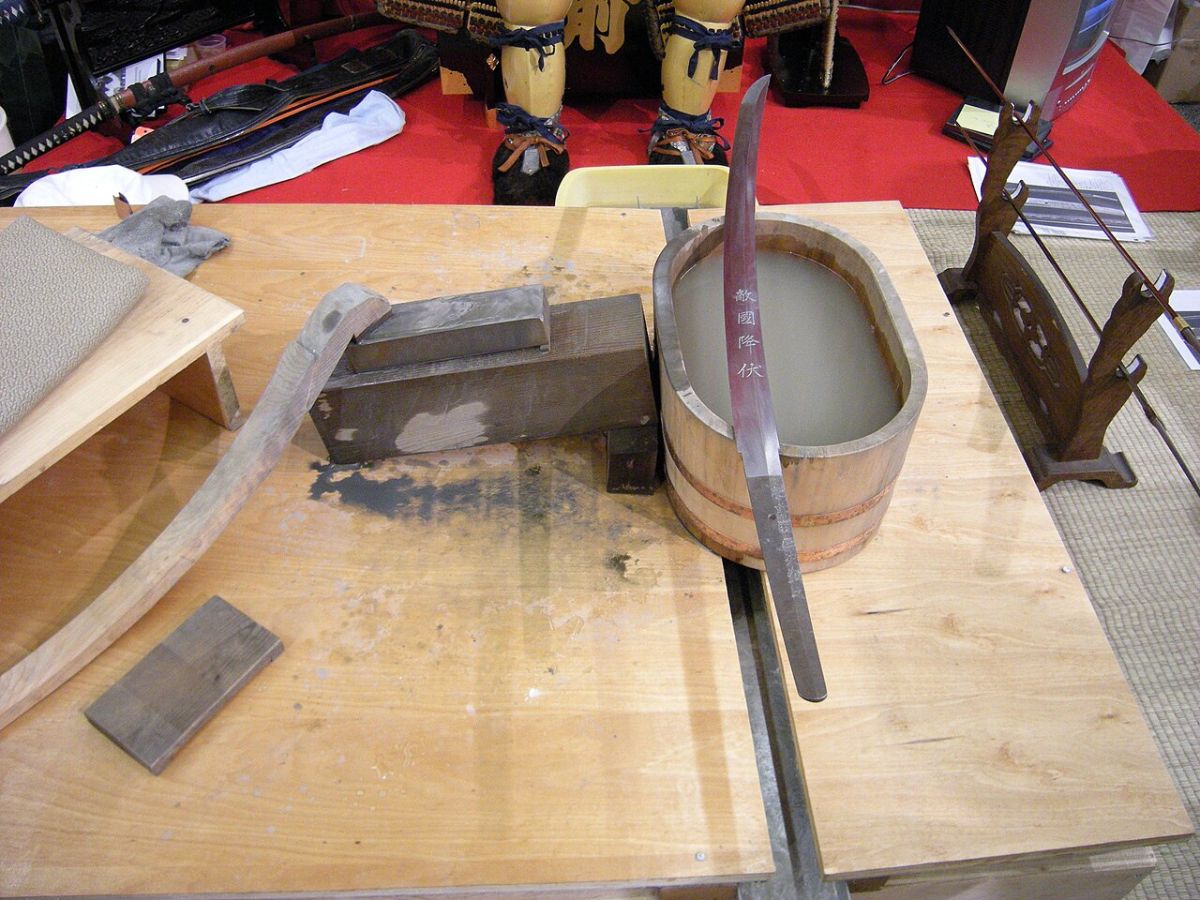 Image Credit: Photo by Joe Mabel, via Wikimedia Commons
Why Does a Japanese Blade Need Proper Polishing?
Maintenance matters more than people think. A blade that's been properly cared for moves through material instead of fighting it, which means less strain on your hands over a long session.
- Improved performance: Regular sword or knife polishing removes microscopic wear and tear so it glides effortlessly. A refined edge requires less physical effort from your hands, making long sessions comfortable.
- Corrosion and rust prevention: Tiny pits and scratches on the surface often trap moisture, which eventually leads to damaging rust spots over time. Routine upkeep of a Japanese kitchen knife or a katana smooths out these vulnerable areas and creates a protective barrier. Keeping your metal clean ensures it stays pristine for decades to come.
- Aesthetic preservation: Traditional blades feature stunning grain patterns and unique finishes that deserve to show off their natural brilliance. Polishing gently buffs away dull oxidation to reveal the breathtaking craftsmanship.
- Improved safety standards: A dull tool actually introduces more danger because it slips easily off surfaces and requires excessive downward force. When you maintain a properly sharpened edge, your cuts remain predictable.
What Is the Polishing Process of a Japanese Blade?
Restoring a metal surface involves several methodical stages and the use of specialized stones like Shitaji Togi, Shiage Togi, and specialized stones. Let's discuss the entire process for a deeper understanding.
Assessing the Initial Condition
Before any stone touches the steel, look it over under strong light. Find the deep scratches, the spots where rust has already dug in, the patches that look rougher than the rest. People rush this part, and that's the mistake. Skip it, and you end up grinding the whole blade evenly, which wastes time on sections that were never damaged in the first place.
Coarse Shaping and Correction
Coarse stones like Arato with a grit of 120-220 do the heavy lifting here, knocking out the big flaws and getting the blade's basic shape back. Keep the stone wet, always. Grind it dry and the metal heats up, and that heat can wreck the steel's internal structure before you even notice anything's wrong. Make sure this process is slow. Rush this stage and the edge alignment goes crooked, and you'll be fighting that mistake for every step that follows.
Refining with Intermediate Stones
Once the big damage is gone, switch to a Binsui, which is a medium-coarse stone having 400–800 grit, and start erasing the scratch marks the coarse stone left. Then, for transitioning further, you will use Kaisei, a medium stone with a grit of 1000–2000. Every stone you move up to should sharpen the picture a little more, laying the groundwork for the fine work still ahead.
Fine Polishing
Next comes the fine polishing stage in which you can use finishing stones like Chu-Nagura or Koma Nagura with a grit of 3000-6000 and Uchigomori stone with a grit of 10000+. You can also use finger stones to further accentuate the distinct visual contrast of layered or laminated steel.
During this stage, the objective is not simply to create a mirror finish but also to preserve the blade's original geometry and reveal the natural grain pattern (hada) and temper line (hamon). Professional polishers remove only the minimum amount of steel necessary, as excessive polishing can permanently alter the blade's shape, reduce its cutting performance, and lower its long-term value.
Applying Specialized Powders
Polishing powders mixed into oil, applied by a bare thumb or a clean cloth. Tiny particles, real shine, and a clearer line between the hardened edge and the softer steel behind it. One sloppy pass here and you can undo an hour of earlier work, so precision matters more at this stage than almost any other.
Final Cleaning and Oiling
Every trace of grit and residue comes off with a soft cloth and a proper cleaner. Then, without delay, a thin coat of camellia or clove oil goes on the bare metal. That thin film is the only thing standing between your freshly polished blade and rust once it's back in storage.
Risks of Improper Japanese Blade Polishing
Japanese blade polishing removes a very small amount of steel during each stage of the process. While this is necessary to restore the blade's finish and edge, improper polishing techniques can permanently alter the blade's original geometry. Applying uneven pressure, using the wrong stone, or removing excessive material can change the blade's profile, weaken the edge, and reduce its cutting performance.
Unlike minor scratches, these mistakes cannot simply be repaired because the removed steel cannot be replaced. Excessive polishing may also erase important details such as the blade's original lines, surface features, and temper pattern (hamon), all of which are essential to the craftsmanship of traditional Japanese blades.
For antique Japanese swords, improper polishing can significantly reduce their historical authenticity, artistic appearance, collector value, and functional integrity. This is why valuable Japanese swords are traditionally polished only by highly trained togishi, who spend years learning techniques that preserve the blade while enhancing its appearance.
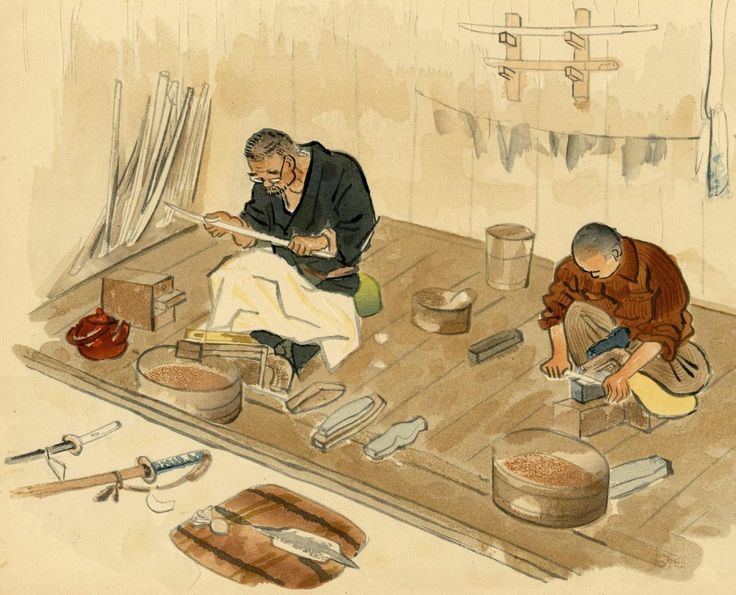
Safety Tips to Keep in Mind When Polishing a Japanese Blade
Working with Japanese blades demands your full attention because even a small slip can mean a nasty cut or a permanently damaged edge. Keep these safety points in mind:
- Keep your setup stable - Set your stones on something that won't move - a rubber mat, a damp towel, whatever keeps them from sliding out from under you mid-stroke.
- Always point the edge away from you - Point the edge away from your body. The blade should always go away from your fingers, full stop.
- Keep your workspace tidy - Work somewhere with good light, no clutter, nothing within arm's reach that's going to make you flinch and pull the blade the wrong direction.
- Don't rush your strokes - This is the one people ignore most. Rushed pressure is uneven pressure, and uneven pressure is how a bevel catches skin.
- Protect your off-hand - A cut-resistant glove on your off-hand is a must, especially early on when you're shaping rough metal.
Conclusion
Japanese blade polishing is a highly specialized craft that requires patience, technical knowledge, and years of practice to perform correctly. Traditional polishing removes only a minimal amount of steel while preserving the blade's geometry, cutting performance, and distinctive features. Proper polishing enhances a blade's appearance, performance, and longevity, while poor workmanship can permanently damage the blade and diminish its functional, artistic, historical, and collector value.
Take your time, follow the correct techniques, and avoid rushing the process. A craft this old deserves patience and respect, and consistent, careful work will always produce better results than speed.
FAQs
What type of oil is good for swords?
For Japanese kitchen knives or sword blades, clove or camellia oil both work well and protect the metal from moisture.
Are swords high maintenance?
Every tool requires minimal maintenance to perform its best, so swords are also the same. Their blade needs to be oiled regularly, and they need proper cleaning and storage.
What is the difference between synthetic and natural whetstones?
Natural stones are mined directly from the earth, giving your blade a forgiving, unique finish through natural grit variations. Synthetic stones are lab-made for uniform consistency and faster cutting, making them predictable and far easier to master.
Can you polish a Japanese sword at home?
Yes, but only basic cleaning and maintenance are recommended. Traditional Japanese sword polishing requires specialized tools and years of training. Improper polishing can permanently damage the blade and reduce its historical and collector value.
Can over-polishing damage a blade?
Yes. Every polishing session removes a small amount of steel. Excessive polishing can alter the blade's geometry, weaken the edge, and reduce its performance, appearance, and long-term value.
How often should a Japanese knife be polished?
Most Japanese knives only need polishing once or twice a year with normal home use. Frequent users may polish them more often, depending on the blade's condition and how well it is maintained.
Is sharpening the same as polishing?
No. Sharpening restores the cutting edge, while polishing refines the blade's surface, removes fine scratches, and enhances its appearance. Both are important but serve different purposes.
Should antique Japanese swords be professionally polished?
Yes. Antique Japanese swords should only be polished by a trained togishi. Professional polishing preserves the blade's geometry, craftsmanship, and historical value while preventing irreversible damage.
Why is Japanese sword polishing important?
Japanese sword polishing improves the blade's appearance, protects it from corrosion, and preserves its cutting performance. It also reveals important features such as the hamon and hada while maintaining the blade's original craftsmanship.
How long does it take to polish a Japanese sword?
A traditional Japanese sword polish typically takes 2 to 3 weeks, depending on the blade's condition. The process is completed gradually to preserve the blade's geometry and finish.
Leave your comment