
Cooking with the right knife can completely change your experience in the kitchen. Japanese kitchen knives are a perfect example - they feel sharper, lighter, and more precise than most ordinary knives. But this didn’t happen by chance.
The design and craftsmanship come from centuries of Japanese sword-making, where every blade had to be strong, balanced, and razor-sharp. After carrying swords became illegal in Japan, swordsmiths shifted to making knives to keep their passion alive.
Over time, these techniques were adapted for the kitchen, creating knives that are both practical and beautiful.
In this blog, we’ll take a closer look at how the art of sword-making shaped Japanese kitchen knives and why they make cooking not only easier but also more enjoyable.
How Did Japanese Kitchen Knives Evolve from Swords?
It might seem strange that a deadly weapon would inspire a kitchen tool. But this change was born out of a major shift in the history of Japanese knives. Swordsmiths were forced to find a new way to use their unique talents.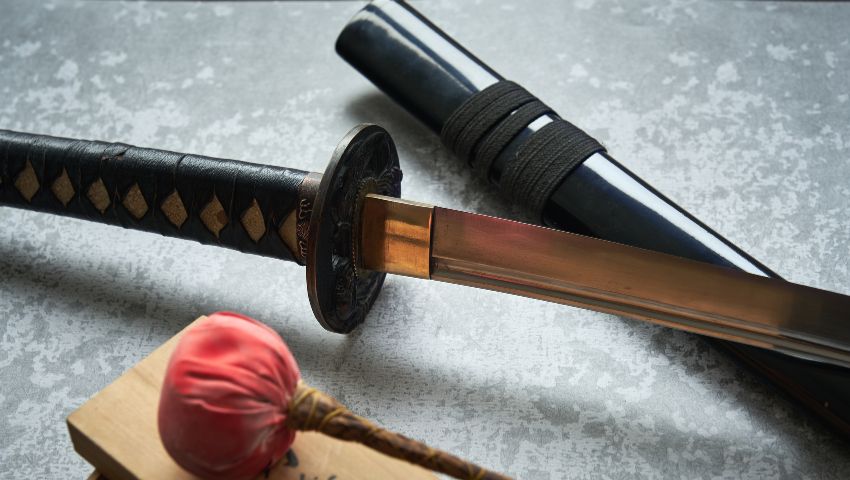
The Katana Legacy: From Weapon to Culinary Inspiration
The katana was much more than just a weapon for the samurai. It was a spiritual object and a symbol of their status. Its construction methods are what made it so effective and legendary.
The katana holds a deeply important place in Japanese history. It was critical for both culture and battle. The makers developed core techniques that defined the sword's quality. These involved using a special type of steel called tamahagane.
They also used folding methods and something called differential hardening. These steps ensured the sword was both razor-sharp and strong.
Meiji Restoration and the Shift to Tools
The age of the samurai ended in the late 1800s. This historic change meant an end to the demand for weapons. The skilled swordsmiths had to adapt to survive.
During the Meiji era, people couldn’t carry swords anymore. That left swordmakers out of a job, but they got creative. They put their skills to work on things everyone needed, like tools for the garden, chisels, and really sharp professional kitchen knives. Their craft lived on, just in a different form.
Just like the swordsmiths of the Meiji era, our artisans at Kazoku Knives carry that same dedication forward - blending tradition with modern steel for unmatched performance. Check out our premium Japanese knives collection.
What Metallurgical Techniques Make Japanese Knives Exceptional?
The real genius of the katana lay in how it was made. It was all about the metal and the way it was treated with heat. This ancient knowledge is why modern Japanese knives perform so well.
Steel Selection and Folding Techniques for Sharpness
To make a truly great blade, you need great raw material. The swordsmiths understood this completely, which led them to develop incredibly pure steel. This steel is what gives Japanese knives their legendary edge.
The traditional steel was tamahagane. This is a high-carbon steel known for being clean, tough, and super sharp. Swordsmiths folded it again and again to make it even stronger.
- Folding helped to push out impurities and make the steel stronger.
- It created beautiful, layered patterns that you can still see on high-end Japanese cutlery knives today.
Differential Hardening for Edge Durability
The most incredible technique was making the sword both hard and flexible. This seeming contradiction was solved with a process involving clay. It gave the katana a secret advantage.
The swordsmiths applied a special clay mixture to the blade before heating and cooling it. This is called differential hardening. The clay created the hamon, which is the visible temper line. It made the cutting edge incredibly hard for sharpness.
At the same time, the spine of the blade stayed softer and flexible, so it would not snap. This concept is used in modern knives: a very hard cutting edge for precision, combined with a tough spine for durability.
Modern Steels Inspired by Japanese Sword-Making Principles
While we don't use tamahagane for every knife today, the principles remain strong. Modern metallurgy helps recreate that perfect balance of hardness and toughness. The spirit of the katana lives on in the materials.
These days, knife makers use modern steels like VG10, high-carbon stainless, and powdered steel - materials known for their strength, rust resistance, and lasting sharpness.
Even with all this new technology, they still follow time-tested sword-making methods like folding and heat-treating, which give each knife its signature balance and precision.
Blade Geometry and Edge Design in Japanese Kitchen Knives
The shape of the blade and the way it is sharpened are just as important as the steel itself. Swords taught makers how to design an edge that cuts, rather than tears.
Edge Types and Beveling
To get that super fine edge, the katana was sharpened on only one side. That same idea carried into Japanese knives.
Many of them have a single-bevel edge, or kataba, meaning one side does most of the cutting work. It’s a design that traces back to the katana’s shape and precision.
Western knives usually use a double-bevel (ryoba). The Japanese single-bevel is best for incredibly precise slicing. Edge angles are kept very thin, optimizing them for:
- Slicing precision
- Durability
- Ease of maintenance
Influence of Katana Curvature on Knife Shapes
Even the curve of a katana influenced the specialized shapes of professional kitchen knives. Certain knife types exist solely because of this swordsmithing history.
You can see the influence of the katana's gentle curve in certain knives. For example, the Yanagiba (used for slicing fish) is long and slender. The Deba (used for filleting) is thick and sturdy.
However, not all knives have a curve. The straight-edged Usuba and Nakiri knives are designed for the most precise, straight-down cutting of vegetables. They are all highly specialized.
Sharpening and Polishing Techniques for Long-Lasting Blades
A great blade is useless without a perfect edge. The final steps of sharpening a katana were painstaking. That attention to detail is still used on today's best knives.
The method of finishing a sword involved a progression of whetstones. This technique is fully inherited by today's Japanese cutlery knives. Knife makers use a series of fine whetstones to create a stunning edge.
This includes micro-bevels and mirror-polishing. This process helps the knife retain its sharpness longer and gives it a beautiful, lasting finish.
How Did Philosophy and Culture Shape Japanese Knife Making?
The influence goes beyond metal and shape. The very mindset of the swordsmith-the dedication and respect for the craft-became the foundation of Japanese knife making.
Monozukuri: The Japanese Art of Craftsmanship
Monozukuri is a Japanese concept that means "making things." It embodies an intense dedication to perfection. This philosophy is evident in every quality knife.
This philosophy involves a deep dedication to precision and continuous self-improvement. It also means showing immense respect for the tools and the materials.
This focus on ergonomics, perfect balance, and overall quality is a direct reflection of the sword principles. Every knife is treated as a work of art and a function.
Artistry in Blade Patterns
The functional process of folding steel also created beautiful, unique patterns. This artistry was carried over, creating the beautiful visual appeal of today's blades.
The layered look of folded steel is highly prized. This aesthetic is now created using modern techniques to produce what we call Damascus and layered finishes.
This makes the knife look stunning. It is the integration of visual beauty with practical utility. The knife has to work perfectly, but it should also be beautiful to look at.
Cultural Motivation Behind Professional Japanese Knives
The samurai demanded perfection from their swords. This same demand for excellence was transferred to the professional kitchen.
The high value placed on precision and performance in a sword was translated perfectly to the exacting standards of Japanese chefs. They needed tools that were reliable and could make incredibly clean cuts.
This cultural motivation ensures that Japanese cutlery knives are always striving for the very highest performance.
Evolution of Japanese Knife Types and Regional Specialties
Long ago, sword makers had to specialize. They made blades for every kind of job. This idea carried over to the kitchen, which is why Japanese knives are so varied today.
Petty
- Purpose: Peeling, trimming, and slicing
- Why it’s special: Small, versatile Japanese utility knives for precise work
Sujihiki
- Purpose: Single-stroke slicing of boneless proteins
- Why it’s special: Long, narrow, and thin double-bevel blades
Kiritsuke
- Purpose: Detailed prep work
- Why it’s special: Long, flat blade with an angled, sword-like "K-tip
Nakiri
- Purpose: Chopping vegetables
- Why it’s special: Rectangular blade for even cuts
Gyuto
- Purpose: Multi-purpose (meat & veggies)
- Why it’s special: Versatile chef’s knife for almost anything
Santoku
- Purpose: Multi-purpose
- Why it’s special: Great for slicing, dicing, and mincing
Leave your comment