
A sharp knife changes everything about cooking. Suddenly prep isn't a chore; it's almost meditative. That's why so many home cooks drop serious money on high-quality Japanese kitchen knives, chasing that clean, precise slice through vegetables and proteins. But some habits can completely affect your knife in a negative manner. Slowly, quietly, and before you know it, a razor edge has turned into something closer to a butter knife. Treat your cutlery right, though, and it'll outlast most of the appliances in your kitchen. Consider Kyoto, Sakai, Sanjo, or any other place in Japan; master blacksmiths there have spent years learning how to shape a blade. A tool with that kind of history deserves better than what most of us give it. Skip the basics, and even the best steel on earth will eventually let you down. Protecting that investment isn't complicated, though. So, in this blog, you will learn about some common ways you could be ruining your kitchen knives and more.
The Most Essential Kitchen Knives that Every Chef Should Own
You don't need twenty Japanese kitchen knives, only the right three. Build around versatile blades that fit how you actually cook, and suddenly any ingredient feels manageable.
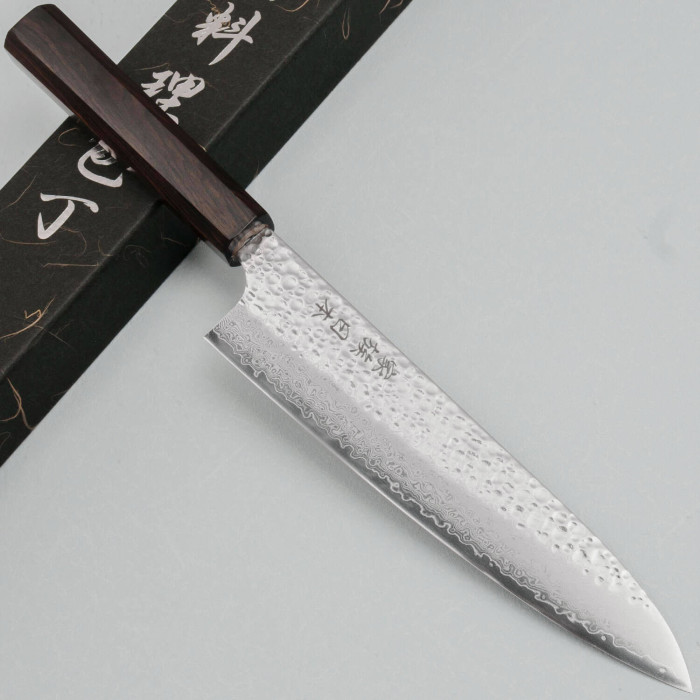
- Chef Knife: Slicing, dicing, chopping meat and big vegetables, a chef knife like the Kazoku Uteki Premium Mono Ebony Gyuto 21 cm does it all without complaint. That gentle curve along the edge? It's built for rocking motions, the kind that make prep feel almost rhythmic.
- Vegetable Knife: This rectangular blade tears through leafy greens and root vegetables with almost no resistance. Full contact with the board means no more of those maddening accordion slices still hanging together.
- Paring Knife: A paring knife is the one you reach for peeling fruit or trimming a garnish, jobs where a big blade is just overdoing it. No serious kitchen setup skips this one.
9 Everyday Habits That Are Ruining Your Kitchen Knives
Even top-tier Japanese knives demand gentleness and real technique. Break these nine habits and watch how much longer your knife’s edge actually lasts.
1. Using the Wrong Cutting Board
Glass, marble, ceramic tile, titanium - all of them roll or chip a fine steel edge almost on contact. Quartz countertops affect steel faster than the toughest food ever would. Wood and soft rubber absorb the hit instead of fighting back. The best would be to use end-grain wood, or soft food-grade polyethylene.
2. Tossing Knives Into the Sink
A loose knife in a stainless sink is basically an accident waiting to happen. It clinks against ceramic, against cast iron, and each clink leaves a tiny nick you won't notice until it's too late. Standing water doesn't help either, as corrosion loves steel. The solution is to always wash your Japanese kitchen cutlery and dry it. Set it aside on a towel, away from the other dishes.
3. Putting Knives in the Dishwasher
Harsh detergent, extreme heat, and water jets are strong enough to knock metal against metal. That's a dishwasher cycle, and it's brutal on fine cutlery. Humidity warps wooden handles; chemical salts eat at steel. Even the blade's temper can suffer under that much heat. So, it would be smart to just hand wash it with mild soap, warm water, and a soft sponge.
4. Cutting the Wrong Foods or Materials
Push a fine blade through frozen meat or thick bones, and something's going to affect your knife. Japanese steel is hard and built for slicing, never for prying or twisting. Use it as a lever, and you've basically signed up for chipping. So, keep a cleaver or poultry shears around for the heavy stuff.
5. Scraping Ingredients With the Sharp Edge
That satisfying scrape, sweeping chopped garlic off the board with the blade's edge? It's ruining your knife in real time. What you're hearing is the apex bending, flattening, giving up its sharpness one scrape at a time. Do it daily, and dullness arrives fast. Instead, flip the knife and use the spine. Another alternative could be to just grab a cheap bench scraper.
6. Storing Knives Loose in a Drawer
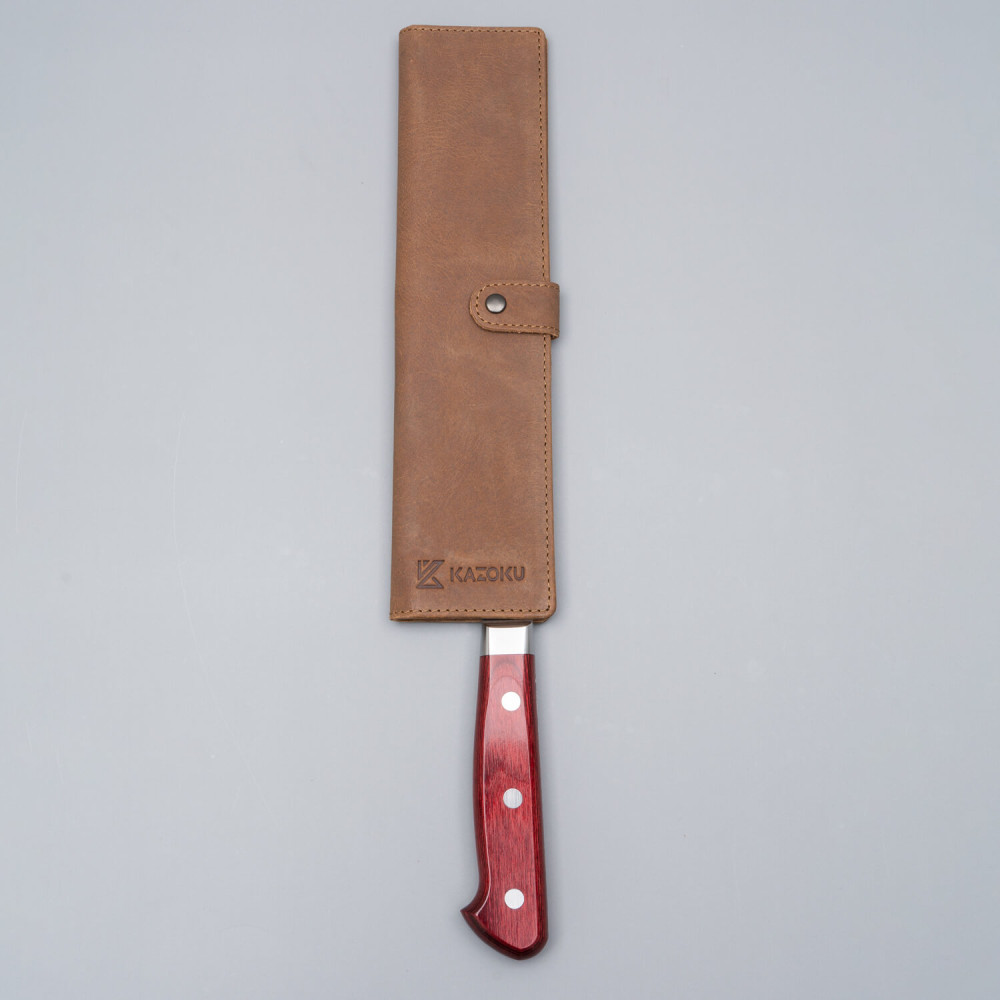
A crowded drawer means constant metal-on-metal contact every single time it opens. Over time, you will notice scratches and dull spots. And a genuine risk to your fingers if you reach in without looking first. It is better to go for any of these: a magnetic strip or a wood block. In order to give your kitchen knife extra protection, you can also get the Kazoku Leather Knife Guard. It is made from high-quality leather and comes with strong magnets to ensure top-most security.
7. Sharpening Too Much or Not Enough
Aggressive pull-through sharpeners grind away way more steel than they should, wrecking the blade's original geometry in the process. Neglect it entirely, though, and you'll end up pushing harder with every cut, which is exactly how slips happen. Balance should be your focus. It is best to use the Kazoku Prestige Sharpening Stone 1000. It has a 1000 grit stone and doesn’t even require any soaking.
8. Using the Wrong Knife for the Job
A delicate vegetable blade sawing through crusty bread. That should never happen, and it puts pointless strain on tools that weren't designed for that job. Every knife has its own thickness, its own grind, matched to a specific task. The solution is to match the tool to the job. Bread gets a serrated knife, always. Get your hands on the Kazoku Takahiro Bread Knife 23 cm. It has a Tsuchime finish and comes with a brown pakka wood handle, so you can get a clean finish with a comfortable grip.
9. Leaving Knives Wet After Washing
Moisture on steel knives is basically an invitation: rust shows up within minutes, not hours. Even "rust-resistant" stainless isn't immune if it sits wet long enough on a drying rack. Wooden handles also suffer as dampness rots them slowly, over time, without you noticing. It would be wise to dry your Japanese kitchen knives completely. Do this every time, before they go back into storage.
Conclusion
A little mindfulness goes a long way here: every onion sliced, every fillet portioned, it all adds up. Skip these nine mistakes and your blades keep their geometry, your prep stays effortless. There's something almost respectful about it too, a nod to the Japanese cutlery makers who poured real pride into that metalwork. Wooden boards, immediate hand washing, proper storage: do those three things consistently, and your knives will still be sharp years from now. Make it a habit, starting today, and your food and hands will thank you for it. If you are confused about where to purchase high-quality knives, then you can check out Kazoku Knives. They have a wide range of superior-quality Japanese kitchen knives at a great price range.
FAQs
What is the golden rule for knives?
You should always do a particular cooking task with the knife that is actually suitable for it. This will ensure that your knives will stay in good condition.
Should you soak knives?
No, you should not soak a knife in water, especially one with a wooden handle. Soaking it in for a long time will affect the handle and the rivets of the knife.
Is it better to wash knives in hot or cold water?
Never wash knives at an extreme temperature. Go for warm water to ensure that your knife gets washed properly without any damage.
Leave your comment